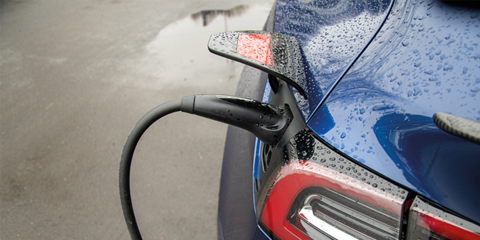
A Freedom of Information (FOI) investigation by Close Brothers Motor Finance (CBMF) has uncovered significant reliability issues and oversight of England's public electric vehicle (EV) charging network, exposing what it describes as an EV ‘postcode lottery’.
FOI responses from 17 English county councils show that while some authorities closely monitor charger performance and quickly respond to faults, others hold no operational reliability data because responsibility has been handed to private Chargepoint Operators (CPOs). The findings point to inconsistent oversight of the public charging network at a time when confidence in EV infrastructure remains one of the key barriers to purchasing hybrid or electric cars.
The research also highlights widespread reluctance to rely on public charging. More than half (52%) of drivers surveyed said they never use public charging points, with concerns around cost, availability and reliability all contributing to low usage.
Among motorists who rarely or never use public chargers, 13% said charging was too expensive or pricing was unclear, while one in ten (10%) said chargers were often busy or unavailable. A further 8% said public charging points were unreliable or frequently out of service. Safety also remains a concern, with 17% citing worries about using public chargers, including poorly lit locations (8%) and leaving their vehicle unattended (9%).
The FOI responses reveal a striking contrast between local authorities. Northumberland County Council monitors all 487 of its public chargers every hour through a digital management platform and reports 97% uptime across its rapid charging network. Surrey County Council similarly monitors its 411 charging sockets, keeping downtime below 3%.
By comparison, Hampshire County Council reported that 39 of its 157 public chargers - around a quarter of the network – were unavailable, with 27 deliberately switched off because of low utilisation. Leicestershire County Council confirmed that 10 of its 53 charging sockets have been permanently removed from service.
The investigation also uncovered what CBMF describes as a ‘data black hole’ in parts of the country. Lancashire, West Sussex, Nottinghamshire and Essex all confirmed they do not hold operational fault or reliability data for public charging infrastructure because networks are managed by third-party operators. West Sussex County Council said the operational data belongs to Connected Kerb and is therefore not information the authority holds.
John Cassidy, Managing Director at Close Brothers Motor Finance, said: "With ongoing debate around EV targets and the pace of the UK's transition to electric vehicles, one thing remains constant: drivers need confidence in the charging network if they're going to make the switch.
"Our findings show that confidence isn't just about having more chargers on the map - it's about knowing they'll be working when you arrive. The fact that some councils can monitor faults in real time while others don't even hold reliability data creates an inconsistent experience for motorists depending on where they live.
"If the UK is to accelerate EV adoption, improving reliability, transparency and accountability across the public charging network will be just as important as expanding its size. Drivers need confidence that charging will be straightforward wherever they travel.
"Public infrastructure will remain central to that transition, but businesses also have a role to play. By working with Pod, we're helping dealers and their customers access dependable charging solutions that make switching to electric easier."
Close Brothers Motor Finance is calling on the Government and local councils to accelerate investment in EV charging infrastructure while introducing more consistent standards for monitoring and reporting charger reliability. Greater transparency over network performance would help build consumer confidence and support the UK's transition to electric vehicles.
Against this backdrop, Close Brothers Motor Finance announced a new multi-year partnership with EV charging specialist Pod to help improve access to charging infrastructure for dealers and motorists. The partnership will give more than 5,000 CBMF dealer partners access to commercial forecourt charging solutions, while customers purchasing electric vehicles through participating dealerships will be able to access discounted home charging packages.